

Cart
Your shopping cart is empty!
It's never too late to fix it :)
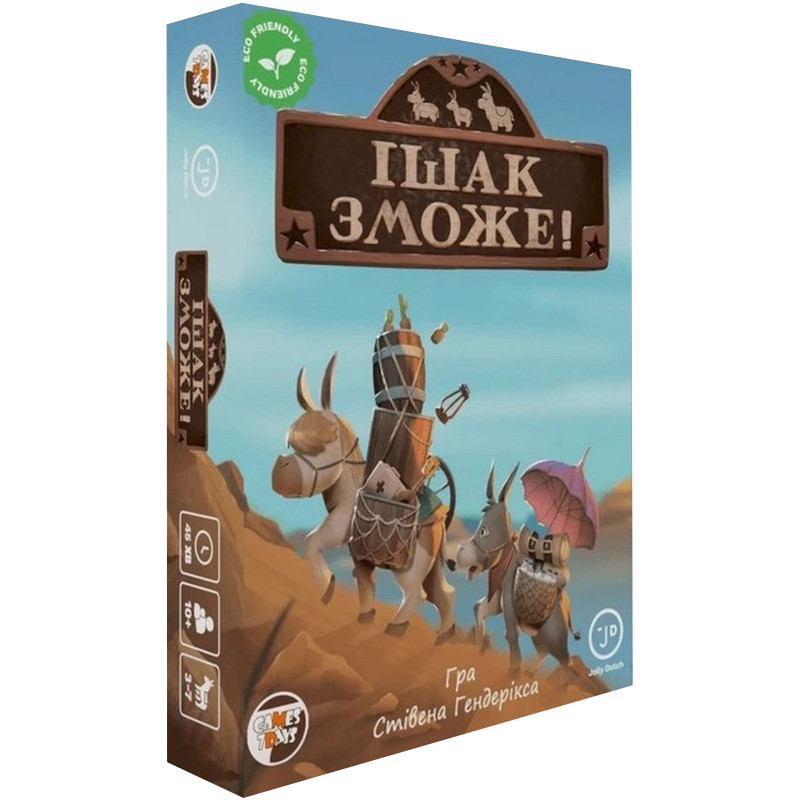


Is a donkey really going to traverse the steep slopes of the Grand Canyon? Is it? Yes. But you and your donkey drivers also need to carry loads to the top of the trail. You have to keep a close eye on how much each donkey can lift. Make the right choices, take advantage of your chasers at the right time, and turn down contracts you can't fulfill.
Preparation
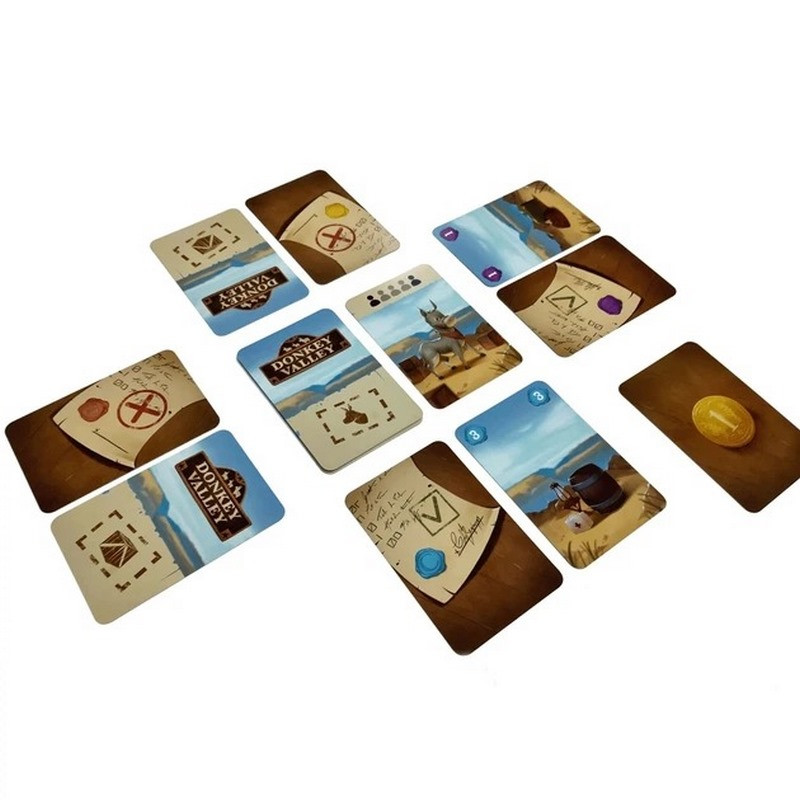
Each player chooses a color and takes the appropriate contract card and cargo cards in his hand. Each player also receives a donkey card.
Shuffle all the donkey cards. Without looking, take eight random cards, form a deck of them and place them face down. These are the donkeys that are in the game, put the other twelve in the box.
Choose the first player. This participant receives the first player's card.
Objective of the game
In each round, a new donkey appears to be loaded with luggage. Each donkey can have a certain effect that affects how much it can lift (the donkey's carrying capacity). Players draw face-up cargo cards and make a choice based on their own judgment of whether or not the donkey is overloaded. Players who make the correct choice earn points. After eight rounds, the player with the most points wins.
Game progression
At the beginning of each round, a new card from the donkey deck is revealed. Everyone looks at the donkey and one player loudly calls out its maximum carrying capacity and any special effects.
Make sure all players know the payload and effects. If there are no effects affecting the payload, the donkey has a standard payload of five times the number of players.
The players then take the following actions:
1. Each player draws a cargo card face up.
2. Starting with the first player and proceeding clockwise, players indicate whether or not they want to take advantage of the chaser. If any player wants to do so, they must play a cargo card from their hand with the chaser advantage face up. This card is not counted when calculating the donkey's carrying capacity. You may use no more than two advantage cards during the entire game. You can find an overview of the advantages at the end of the rules and on the handout card.
3 Starting with the first player and proceeding clockwise, each player must make a choice based on the donkey's carrying capacity. A donkey is overloaded when the total on the cargo cards exceeds the donkey's carrying capacity. If a player believes the donkey is overloaded, he or she abandons the contract by placing a card with the red cross up. If the player believes that the total amount of cargo is equal to or less than the donkey's carrying capacity, he enters into a contract by placing a card with a green marker up.
4 Now all players simultaneously turn their cargo card up. The values on the cargo cards are summed up to see if the donkey is overloaded. Then one of two situations is possible:
The donkey is not overloaded: the total sum of the players' cargo is less than or equal to the donkey's cargo capacity. All contracted players receive their cargo card and place it in their point stack. The remaining cargo cards are placed in the total reset stack.
Donkey Overloaded: the total sum of the players' cargo exceeds the donkey's carrying capacity. All cargo cards are shuffled to form a deck. All players who declined the contract receive a random cargo card from this deck and place it in their point stack. All other cargo cards are placed in the general discard pile.
5. The first player's card goes clockwise to the next player. Start a new round.
Players are free to discuss their cards during the game, including the cards they are playing. However, bluffing is allowed and even encouraged.
End of Game
When the round is over with the last donkey, the game ends. Each player adds up the values on the cargo cards they received during the rounds. These are your points. The player with the highest total wins. In the event of a tie, the challenger with the highest number of cards wins. If the tie persists, the challengers share the victory.